A beautiful landscape should make your home more enjoyable, not add another overwhelming list of chores to your schedule. For busy homeowners in the Lee’s Summit area, low-maintenance landscaping offers a practical way to improve curb appeal and create inviting outdoor spaces without spending every weekend watering, pruning, weeding, and replacing plants.
Low-maintenance landscaping does not mean eliminating plants or settling for a plain yard. It means designing the landscape more intentionally. The right layout, plant selection, materials, irrigation, and drainage can reduce routine upkeep while creating a property that looks polished throughout the year.
Here are several low-maintenance landscaping ideas that can help homeowners in the Lee’s Summit area spend less time working in the yard and more time enjoying it.
Begin with a thoughtful landscape design
Low-maintenance landscaping starts before the first plant goes into the ground. A well-planned design considers sunlight, soil, drainage, mature plant size, water needs, and how the property will be used.
Without a plan, homeowners may end up placing plants where they struggle, creating beds that are difficult to mow around, or selecting shrubs that quickly outgrow their spaces. Those decisions can lead to more watering, pruning, replacement, and cleanup later.
A professional landscape design can organize the yard into functional areas, simplify maintenance routes, and ensure that every plant and feature has a purpose.
Choose the right plant for each location
A plant that naturally fits its location usually requires less attention than one that is constantly fighting the conditions around it. Before selecting plants, consider how much sunlight the area receives, whether the soil stays dry or wet, and how much room the plant will have when it reaches maturity.
Sun-loving plants placed in deep shade may become thin or weak. Plants that prefer well-drained soil can struggle in a consistently wet area. Shrubs planted too close to the house may need frequent pruning as they mature.
Matching each plant to the conditions of the site can reduce replacement, watering, pest problems, and unnecessary trimming.
Incorporate native and Missouri-adapted plants
Native and regionally adapted plants can be valuable additions to a low-maintenance landscape. Once established and placed in appropriate conditions, many are well suited to Missouri’s heat, rainfall patterns, and seasonal changes.
Native perennials and grasses can provide summer color, fall texture, and pollinator value without relying entirely on annual flowers that must be replanted each year. Options such as purple coneflower, butterfly weed, black-eyed Susan, prairie blazing star, and little bluestem can be incorporated into a professionally designed residential landscape.
Native landscaping does not have to look wild or unstructured. Repeating plant groupings, defining bed edges, and layering plants by height can create a clean, intentional appearance.
Simplify the plant palette
More plant varieties do not always create a better landscape. A yard filled with many unrelated plants can become visually busy and may require several different maintenance routines.
Using a smaller selection of dependable plants in repeated groups can make the landscape feel more cohesive and easier to manage. Repetition also creates stronger visual impact than scattering individual plants throughout the yard.
A simplified plant palette can help homeowners keep track of watering, pruning, and seasonal care without sacrificing color or variety.
Use perennials for dependable seasonal color
Annual flowers can provide dramatic color, but they typically require seasonal planting and removal. Busy homeowners may benefit from using perennials as the foundation of their planting beds and reserving annuals for a few high-impact locations.
Perennials return each year and can provide color, texture, and movement through multiple seasons. They may still require occasional division or cleanup, but they generally reduce the need to redesign and replant entire beds every spring.
Containers near the front door or patio can provide an easy place to add changing seasonal color without creating large, labor-intensive annual beds.
Select shrubs that fit the available space
Shrubs are important for year-round structure, but choosing the wrong size can create ongoing work. A shrub that naturally grows six feet wide will require constant pruning when planted in a three-foot space.
Review the mature height and spread of each plant rather than relying only on its size at the garden center. Appropriately sized shrubs can maintain their natural shape with less trimming and are less likely to cover windows, crowd walkways, or overwhelm neighboring plants.
Slow-growing and compact varieties may also be useful in smaller foundation beds or narrow side yards.
Reduce difficult-to-maintain lawn areas
A lawn can be useful for play, pets, and open space, but not every section of turf serves a practical purpose. Narrow strips, steep slopes, deeply shaded corners, and areas around trees may be difficult to mow and keep healthy.
Converting selected lawn areas into planting beds, groundcover, decorative rock, or hardscape can reduce mowing and improve the overall layout of the property. The goal is not necessarily to eliminate the lawn, but to keep turf where it is functional and replace it where another material would perform better.
Curved beds should also be designed with mowing in mind. Smooth, generous lines are generally easier to maintain than small islands and tight corners.
Apply mulch properly
Mulch is one of the most effective tools in a low-maintenance landscape. It helps reduce weed growth, retain soil moisture, moderate soil temperature, and give planting beds a finished appearance.
However, more mulch is not always better. Excessive mulch around tree trunks and plant stems can create problems. Mulch should be spread evenly through the bed while being kept away from direct contact with trunks and crowns.
Organic mulch will eventually need to be refreshed, but a properly mulched bed is generally easier to maintain than exposed soil that dries quickly and allows weeds to establish.
Create clean, durable bed edges
Defined bed edges make a landscape look polished and help separate lawn from planting areas. They can also make mowing easier and reduce the spread of grass into the beds.
Natural trench edging offers a clean appearance but may require periodic reshaping. Stone, metal, or other durable edging materials may reduce that work when properly installed.
The best choice depends on the design of the property, the materials used elsewhere, and the amount of maintenance the homeowner wants to manage.
Add hardscaping where it improves function
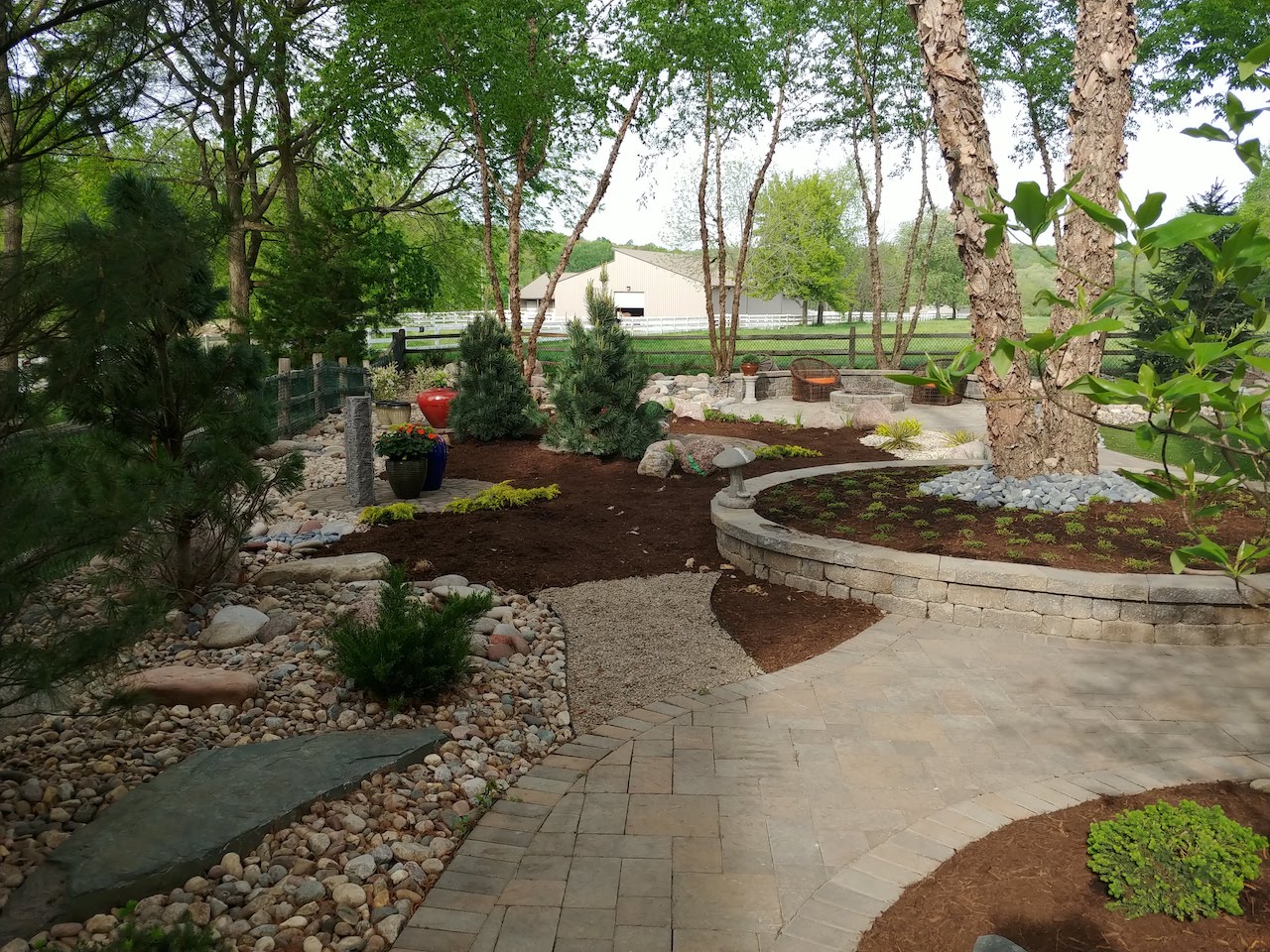
Patios, walkways, seating areas, and retaining walls can make a yard more usable while reducing the amount of planted or mowed space. Hardscaping can also improve circulation and give the landscape a stronger year-round structure.
A paver walkway can replace a worn path through the lawn. A patio can create a defined entertaining area. A retaining wall can make a difficult slope easier to manage while creating level planting or gathering spaces.
Hardscaping should still be planned carefully. Proper base preparation, drainage, scale, and material selection are essential for long-term performance.
Use efficient irrigation
Dragging hoses across the yard can quickly turn landscape care into a chore. An efficient watering system can simplify plant care while delivering water where it is needed.
Drip irrigation or targeted watering systems can be especially useful in planting beds because they apply water near plant roots rather than spraying large areas. Timers and smart controls can also help create a more consistent watering schedule.
Plants with similar water requirements should be grouped together whenever possible. This prevents homeowners from overwatering drought-tolerant plants just to meet the needs of thirstier varieties nearby.
Even a low-water landscape will need regular watering while new plants become established. Low maintenance is usually the result of good long-term planning, not neglect during the first growing season.
Address drainage problems before planting
Standing water, erosion, soggy beds, and washed-out mulch can create repeated maintenance problems. Replacing plants or mulch without correcting the underlying drainage issue usually leads to the same frustration after the next heavy rain.
Drainage should be considered as part of the overall landscape design. Depending on the property, possible solutions may include grading adjustments, downspout extensions, dry creek beds, swales, drains, retaining walls, or moisture-tolerant plantings.
Correcting the way water moves across the property can protect plants, reduce erosion, and make the entire landscape easier to manage.
Limit high-maintenance decorative features
Every landscape feature comes with some level of upkeep. Elaborate water features, large annual beds, clipped hedges, and intricate bed shapes may be beautiful, but they can also require more attention.
Busy homeowners should consider how much maintenance they are realistically willing to perform. A few strong focal points are often more effective than many small features competing for attention.
A specimen tree, attractive patio, fire pit area, boulder grouping, or carefully placed container can add personality without creating a complicated maintenance routine.
Plan for year-round interest
A landscape that depends entirely on spring flowers may feel unfinished during the rest of the year. Low-maintenance design should account for multiple seasons.
Evergreen shrubs, ornamental grasses, plants with attractive seed heads, durable hardscape materials, and trees with interesting bark or fall color can help the yard remain attractive even when fewer plants are blooming.
Year-round structure also reduces the temptation to continually add new plants to fill seasonal gaps.
Remember that low maintenance does not mean no maintenance
Every living landscape requires some care. Plants grow, weeds appear, mulch breaks down, and seasonal cleanup is still necessary. The goal is to make those tasks predictable and manageable.
A low-maintenance landscape may still need:
- Spring cleanup and selective pruning
- Occasional weeding
- Mulch replenishment
- Watering during establishment or extended dry weather
- Fall or late-winter perennial cleanup
- Periodic inspection of drainage and hardscape areas
The difference is that a well-designed landscape reduces unnecessary work and helps each maintenance task produce better results.
Create a landscape that fits your schedule
The best low-maintenance landscape is one designed around the property and the homeowner’s lifestyle. A family that needs an open lawn will have different priorities than someone who wants a quiet garden retreat. A frequent traveler may need more automated watering, while another homeowner may enjoy caring for a few containers but not several large flower beds.
At Evolving Landscapes, we help homeowners create outdoor spaces that are attractive, functional, and realistic to maintain. From plant selection and bed design to patios, retaining walls, drainage improvements, and seasonal maintenance, we can develop a plan that fits both your home and your schedule.
Contact Evolving Landscapes to begin planning low-maintenance landscaping for your property in the Lee’s Summit area.
Frequently Asked Questions
What does low-maintenance landscaping mean?
Low-maintenance landscaping uses thoughtful design, appropriately selected plants, mulch, hardscaping, and efficient watering to reduce routine yard work. It does not mean the landscape will require no care.
What plants are best for a low-maintenance landscape in the Lee’s Summit area?
The best choices depend on the property’s sunlight, soil, drainage, and available space. Native and Missouri-adapted perennials, ornamental grasses, and appropriately sized shrubs can be good options when matched to the site.
Are native plants always low maintenance?
Not automatically. Native plants generally perform best when they are suited to the specific light, soil, and moisture conditions. They also need watering and weed control while becoming established.
How can I reduce the amount of lawn I have to mow?
Consider replacing difficult lawn areas with planting beds, groundcover, decorative rock, patios, walkways, or other hardscape features. Keep lawn in the areas where it serves a clear purpose.
Does mulch reduce landscape maintenance?
Yes. Properly applied mulch can suppress weeds, retain moisture, moderate soil temperature, and create a cleaner appearance. Organic mulch will still need occasional replenishment.
Are rock beds lower maintenance than mulch?
Decorative rock does not need to be replaced as frequently as organic mulch, but weeds and debris can still collect in rock beds. Rock can also increase heat around certain plants, so it should be used selectively.
Can an irrigation system make landscaping easier to maintain?
Yes. Drip irrigation, timers, and targeted watering systems can reduce manual watering and provide plants with more consistent moisture. The system should be adjusted seasonally and inspected for leaks or clogged emitters.
How do patios and walkways reduce yard maintenance?
Hardscape features create usable outdoor areas while reducing the amount of lawn or planting space that requires mowing, watering, and weeding.
Should drainage be addressed in a low-maintenance landscape plan?
Yes. Standing water, erosion, and washed-out beds create recurring work and can damage plants. Addressing drainage during the design process can reduce future maintenance problems.
Can Evolving Landscapes redesign an existing yard to make it easier to maintain?
Yes. Evolving Landscapes can evaluate the existing layout, plants, drainage, lawn areas, and hardscaping to create a more manageable landscape for homeowners in the Lee’s Summit area.