
A sloped backyard can be one of the most frustrating parts of a property. It can make mowing harder, limit how you use the yard, create drainage issues, and leave you feeling like a big part of your outdoor space is going to waste. The good news is that a slope does not have to stay a problem. With the right design, retaining walls can help turn an uneven yard into a space that is more functional, more attractive, and easier to enjoy.
At Evolving Landscapes, retaining walls are already a key part of the company’s work in Lee’s Summit and the Kansas City area, alongside patios, fire pits, pathways, and other hardscape features. Their service pages emphasize retaining walls as both a structural and visual solution for local homes.
Why Sloped Backyards Can Be Difficult to Use
When a backyard has a steep grade, it often creates several challenges at once. A slope can make it harder to create level seating areas, harder to manage runoff, and harder to make the yard feel like an inviting extension of the home. Design guidance from Houzz notes that retaining walls are one of the most common ways to make better use of sloped properties, especially when the goal is to create more level, usable ground.
For many homeowners, the issue is not just appearance. It is also function. A sloped backyard may leave very little space for outdoor dining, entertaining, play areas, or a fire pit. That is where retaining wall design can make a major difference.
How Retaining Walls Create Usable Outdoor Space
A retaining wall holds back soil and helps reshape the grade of the yard. That allows part of a slope to be transformed into flatter, more functional space. Instead of one difficult hill, the yard can become a series of intentional levels or terraces that are easier to use and maintain.
Better Homes & Gardens points to retaining walls as a practical way to add space and structure on a slope, while Houzz highlights terracing and wall systems as common solutions for uneven lots.
In a Lee’s Summit backyard, that could mean creating:
- a level patio area for outdoor seating
- a fire pit gathering space
- a walkway that connects different parts of the yard
- planting beds that feel integrated into the overall landscape
- a more defined layout that makes the property feel finished
Retaining Walls Can Help With Drainage, Too
One of the biggest concerns with a sloped yard is water. Rainwater naturally moves downhill, and without the right design, that can lead to erosion, soggy areas, or added pressure behind a wall. Evolving Landscapes’ own blog states clearly that retaining walls need drainage, noting that without it, hydrostatic pressure and erosion can lead to wall failure. Houzz also notes that taller walls often need gravel backfill and drainage measures such as a French drain to help relieve water pressure.
That is why a retaining wall project should never be just about stacking materials. It should be planned as part of the overall landscape design, especially when drainage and long-term stability matter.
Turning a Slope Into Outdoor Living Space
A retaining wall can do more than solve a grade problem. It can create the base for an outdoor living area. Once a yard has more level ground, homeowners have more options for features like patios, seating areas, pathways, and planting beds.
Evolving Landscapes positions retaining walls as part of a larger hardscape and outdoor-living approach, with services that also include patios, pathways, fire pits, and landscape design. That makes retaining walls especially valuable when the goal is not just to hold soil in place, but to create a backyard people actually want to spend time in.
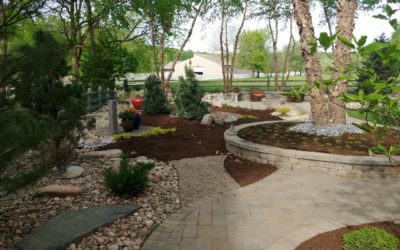
For example, a sloped yard might be redesigned to include a lower-level patio, a retaining wall with built-in planting space, and a pathway that ties the backyard together. Instead of seeing the slope as wasted space, the property starts working as a complete outdoor environment.
Materials and Design Matter
Retaining walls can be built from natural stone, concrete block, poured concrete, timber, and other materials. Houzz notes several common retaining wall materials, while Evolving Landscapes highlights both natural stone and manufactured wall blocks in its own landscape work.
The right choice depends on the style of the home, the size of the project, and the function the wall needs to serve. In many cases, the best retaining wall is one that blends naturally with the rest of the landscape while still doing the heavy lifting needed to support the yard.
Start With a Plan, Not Just a Wall
The best sloped-yard projects begin with a full design plan. That plan should consider the grade of the property, how the space will be used, where water moves, and how the retaining wall fits into the overall layout. On very steep slopes, Houzz notes that additional structural planning may be needed.
For homeowners in Lee’s Summit, retaining walls can be one of the smartest ways to gain more usable backyard space, improve drainage, and make the property more attractive. A difficult slope can become a patio area, a garden terrace, a fire pit lounge, or simply a yard that feels easier to enjoy.
Evolving Landscapes has been serving Lee’s Summit since 2004 and focuses on custom landscape and hardscape solutions that improve functionality and outdoor quality of life. If you are ready to do more with a sloped backyard, retaining walls can be the first step toward creating a space that works better for the way you live.
Can a retaining wall really make a sloped backyard usable?
Yes. A retaining wall can help create flatter, more functional areas in a yard by holding back soil and reshaping the grade. That can open up space for patios, seating areas, planting beds, and walkways.
Do retaining walls help with drainage?
They can, but only when they are designed properly. Drainage is an important part of any retaining wall project because water buildup behind a wall can cause pressure and damage over time.
What can I add to a backyard once retaining walls create more level space?
Many homeowners add patios, fire pits, pathways, planting beds, or seating areas. Evolving Landscapes also offers these hardscape features as part of its outdoor design services.
What materials can retaining walls be made from?
Common options include natural stone, concrete block, poured concrete, and timber. The best choice depends on the look you want and the structural needs of the project.
When should I call a professional for a sloped backyard project?
It is smart to start with a professional plan anytime the yard has a significant slope, drainage concerns, or the goal is to create usable outdoor living space. Very steep slopes may need additional structural planning.
Can retaining walls improve the look of my yard too?
Yes. Retaining walls are not just functional. They can also add structure, definition, and visual appeal to the landscape, especially when paired with patios, pathways, and planting areas.
Are retaining walls a good fit for homes in Lee’s Summit?
Yes. Evolving Landscapes specifically offers retaining wall installation for Lee’s Summit homes and positions them as a solution that improves both function and appearance.
What is the first step if I want to improve a sloped backyard?
The best first step is to create a plan for how you want to use the space. That helps determine where retaining walls, drainage improvements, patios, and other features should go.